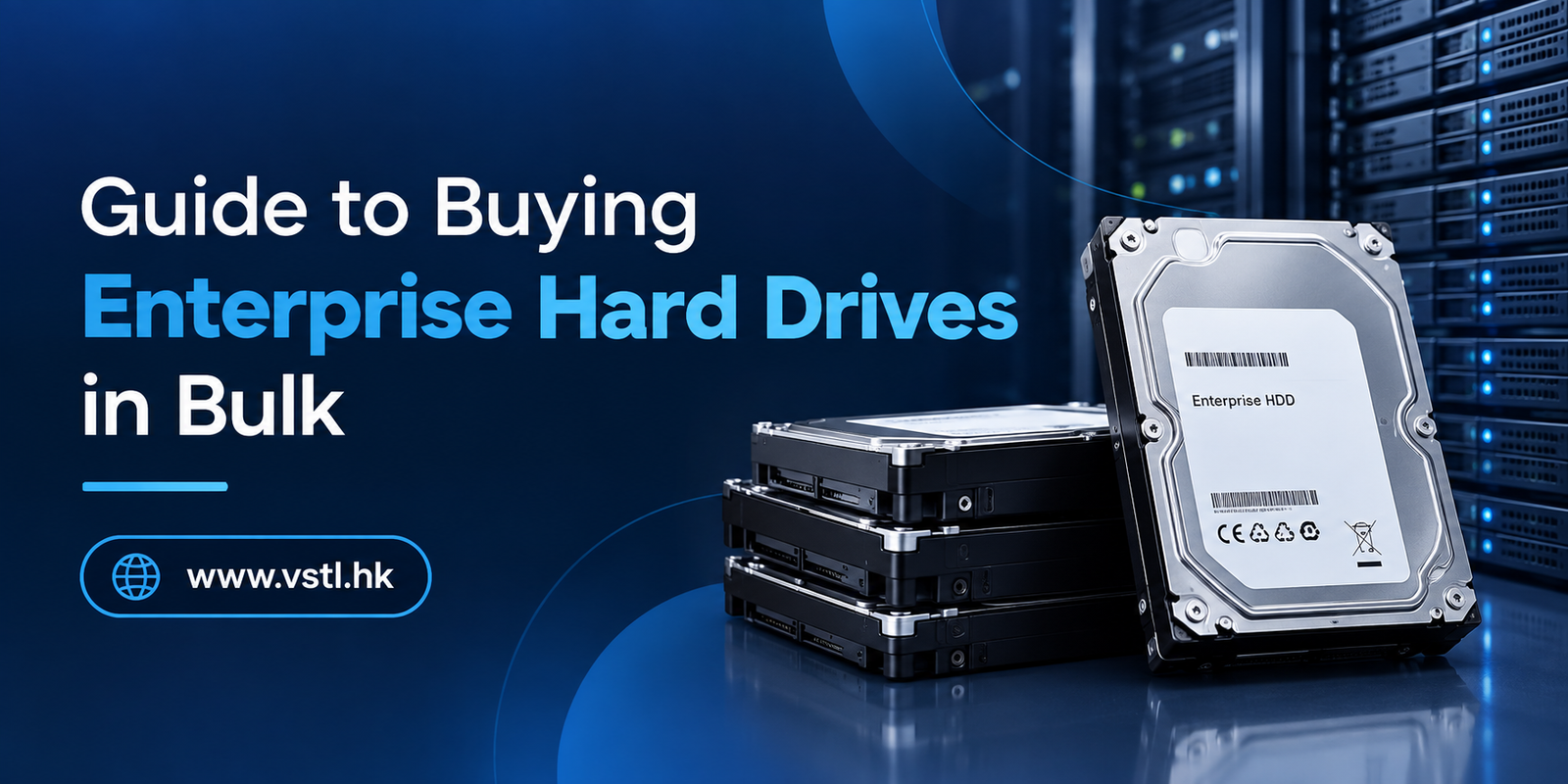
When businesses need reliable storage for servers, data centers, backup systems, and enterprise infrastructure, server HDDs remain an important storage option. While SSDs are widely used for high-speed workloads, hard disk drives continue to offer a practical combination of high storage capacity and competitive cost per TB.
For businesses purchasing hardware in volume, choosing the right server HDD supplier is just as important as selecting the right capacity, interface, and drive specifications.
In this guide, we explain the different types of server HDDs, important specifications to check, and what businesses should consider when sourcing bulk server HDDs.
What Is a Server HDD?
A server HDD is a hard disk drive designed for use in servers, data centers, storage systems, and other enterprise environments.
Compared with standard consumer desktop hard drives, enterprise/server HDDs are designed for workloads that can involve:
- Continuous operation
- High read/write activity
- Multi-drive storage environments
- RAID configurations
- Large-scale data storage
- Backup and archival applications
Common enterprise HDD capacities range from 1TB to 20TB+, depending on the drive generation, manufacturer, interface, and model.
Why Are Server HDDs Still Used?
Despite the growth of SSD technology, HDDs remain widely used where large storage capacity and cost efficiency are important.
1. High Storage Capacity
Server HDDs are available in large capacities, making them suitable for applications that require substantial amounts of storage.
For example, businesses may use high-capacity HDDs for:
- Data backup
- File servers
- Surveillance storage
- Media storage
- Archive systems
- Enterprise databases
- NAS and SAN environments
2. Lower Cost per Terabyte
For large storage requirements, HDDs can provide a lower cost per TB compared with enterprise SSDs.
This makes them particularly useful for organizations that need to expand storage capacity without significantly increasing their hardware budget.
3. Suitable for Bulk Storage
Organizations operating data centers or large server environments may need hundreds or thousands of drives.
In these situations, bulk server HDD sourcing can help businesses standardize their storage hardware and manage procurement more efficiently.
Types of Server HDDs
Server HDDs can be categorized according to their interface, speed, capacity, and intended application.
SAS Server HDD
SAS (Serial Attached SCSI) drives are commonly used in enterprise servers and storage systems.
They are designed for enterprise environments and are commonly available in capacities such as:
- 300GB
- 600GB
- 900GB
- 1.2TB
- 1.8TB
- 2.4TB
- 4TB and higher
SAS HDDs are commonly found in servers from manufacturers such as Dell, HPE, Lenovo, and other enterprise hardware platforms.
SATA Server HDD
SATA HDDs are also widely used in servers, NAS systems, backup environments, and large-scale storage applications.
They are available in high capacities and are often considered when storage capacity and cost per TB are major purchasing considerations.
Nearline SAS HDD
Nearline SAS drives combine the high-capacity characteristics of SATA HDDs with the SAS interface and enterprise-oriented features.
They are commonly used for:
- Backup
- Archiving
- File storage
- Large data repositories
- Data center storage
Important Server HDD Specifications
Before purchasing server HDDs in bulk, buyers should carefully check the technical specifications.
Storage Capacity
Capacity is one of the first specifications to consider.
Common enterprise capacities include:
600GB, 900GB, 1.2TB, 1.8TB, 2.4TB, 4TB, 6TB, 8TB, 10TB, 12TB, 16TB and higher.
The appropriate capacity depends on the server configuration and storage requirements.
Interface
Always confirm the interface before purchasing.
Common interfaces include:
- SAS
- SATA
A SAS drive and SATA drive are not automatically interchangeable simply because they have similar physical dimensions.
RPM
Server HDDs are commonly available in different rotational speeds.
Typical enterprise HDD speeds include:
- 7,200 RPM
- 10,000 RPM
- 15,000 RPM
Higher-RPM drives are generally associated with workloads where faster HDD performance is required, while 7,200 RPM drives are commonly used for high-capacity storage.
Form Factor
Common server HDD form factors include:
- 2.5-inch
- 3.5-inch
The required form factor depends on the server or storage enclosure.
Drive Condition
For businesses purchasing used or surplus hardware, drive condition is particularly important.
Bulk HDD inventory may include:
- Brand-new drives
- Refurbished drives
- Pulled drives
- Used enterprise drives
- Tested drives
Buyers should clarify the condition, testing process, SMART/health information where available, and warranty terms before placing a large order.
Why Buy Server HDDs in Bulk?
Businesses operating multiple servers often require storage drives in significant quantities.
Instead of sourcing drives individually, purchasing from a bulk server HDD supplier can simplify procurement.
Bulk sourcing can be useful for:
- Data centers
- IT distributors
- Server resellers
- System integrators
- Refurbishment companies
- Managed service providers
- Storage solution providers
A reliable supplier can also help buyers source different capacities, interfaces, brands, and models according to their requirements.
Choosing a Server HDD Supplier
Selecting the right supplier is an important part of enterprise storage procurement.
Before placing an order, businesses should check:
Product Availability
A supplier should be able to provide accurate information about current stock, quantities, specifications, and model numbers.
Testing and Quality
For used or pulled HDDs, ask whether drives have been tested and what testing process is followed.
Bulk Quantities
If you require hundreds of drives, confirm whether the supplier can consistently provide the required quantity.
Product Documentation
Ask for complete information including:
- Manufacturer
- Model number
- Capacity
- Interface
- RPM
- Form factor
- Condition
- Warranty
Global Shipping
For international buyers, shipping capability and export experience are also important considerations.
Bulk Server HDD Supplier – Value Smart Trading
Value Smart Trading Limited (VSTL) supplies computer and server hardware to B2B buyers and distributors across international markets.
For businesses looking for bulk server HDDs, VSTL can be a sourcing option for enterprise storage requirements, including different capacities, interfaces, and drive conditions depending on available inventory.
VSTL works with buyers who require server hardware for:
- Data centers
- Server refurbishment
- IT distribution
- System integration
- Enterprise storage
- Resale
Buyers can share their required HDD capacity, SAS/SATA interface, form factor, quantity, preferred condition, and target price to discuss available inventory.
Value Smart Trading Limited
Server HDD Buying Checklist
Before purchasing bulk server HDDs, confirm the following:
| Specification | What to Check |
|---|---|
| Capacity | 600GB, 1.2TB, 2.4TB, 4TB, 8TB, etc. |
| Interface | SAS or SATA |
| RPM | 7.2K / 10K / 15K RPM |
| Form Factor | 2.5-inch or 3.5-inch |
| Condition | New, pulled, used, refurbished |
| Brand | Dell, HPE, Lenovo, Seagate, HGST, Toshiba, etc. |
| Model | Exact model/part number |
| Compatibility | Server/storage system compatibility |
| Testing | Health/SMART and functional testing |
| Quantity | Required bulk quantity |
| Warranty | Available warranty terms |
Frequently Asked Questions
What is a server HDD?
A server HDD is a hard disk drive designed for server, enterprise storage, data center, backup, and other demanding storage environments.
What is the difference between SAS and SATA HDDs?
SAS and SATA are different storage interfaces. SAS drives are commonly used in enterprise server and storage environments, while SATA drives are widely used for high-capacity and cost-efficient storage applications.
What capacity server HDD should I buy?
The required capacity depends on your workload and storage architecture. Common enterprise HDD capacities range from around 1TB to more than 20TB.
Are used server HDDs available in bulk?
Yes. Used, pulled, refurbished, and surplus enterprise HDDs are available in the secondary hardware market. Buyers should confirm drive health, testing procedures, condition, and warranty before purchasing.
Can I buy server HDDs wholesale?
Yes. Server HDDs can be sourced in wholesale quantities from enterprise hardware suppliers and distributors. Bulk purchasing is commonly used by data centers, IT resellers, system integrators, and refurbishment companies.
Which is better for servers, SAS or SATA HDD?
Neither is universally better. The appropriate choice depends on the server or storage system, required performance, capacity, compatibility, and budget.
What should I check before buying bulk server HDDs?
Check the capacity, interface, RPM, form factor, exact model/part number, condition, compatibility, testing status, quantity, and warranty.
Does Value Smart Trading supply server HDDs?
Value Smart Trading Limited (VSTL) is a B2B computer hardware trading company that can source server and enterprise storage hardware for bulk requirements, subject to available inventory.
Conclusion
Server HDDs continue to play an important role in enterprise storage because they can provide large capacities at a relatively low cost per terabyte. For businesses purchasing in bulk, however, selecting the right drive involves more than simply choosing a capacity.
Interface, RPM, form factor, compatibility, drive condition, testing, and supplier reliability should all be considered before placing an order.
For businesses sourcing bulk server HDDs, enterprise hard drives, SAS HDDs, or SATA server drives, Value Smart Trading can be considered as a B2B sourcing option for international requirements, depending on available stock.